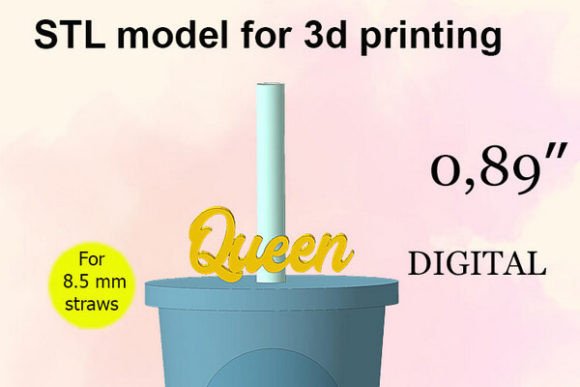
Transforming Digital Designs into Party Essentials: A Deep Dive into the Queen Straw Topper STL File for 3D Print
The intersection of digital fabrication and event planning has created a new niche for creators, hobbyists, and small business owners. Among the most accessible yet impactful applications of this technology is the creation of custom party accessories. Specifically, the Queen Straw Topper STL File for 3D Print represents a perfect example of how small-scale additive manufacturing can elevate the aesthetic quality of social gatherings. This article explores the technical specifications, practical applications, design considerations, and broader implications of using this specific digital asset to enhance baby showers, birthdays, and themed events.
The Rise of Customized Event Decor
In modern event planning, personalization is no longer a luxury but an expectation. Guests today appreciate details that reflect thoughtfulness and thematic consistency. While traditional decor often involves purchasing mass-produced items, the advent of affordable desktop 3D printing allows individuals to produce unique, bespoke elements. A straw topper may seem like a minor detail, but it serves as a focal point on every table, effectively setting the tone for the entire celebration.
The ability to print these accessories on demand offers several advantages over buying pre-made plastic decorations. First, there is zero inventory risk; you only print what you need. Second, the designs are infinitely customizable, allowing for last-minute changes or specific color matching. Third, the tactile quality of 3D printed objects often feels more premium than thin, molded plastic alternatives found in discount stores. The Queen Straw Topper STL File for 3D Print capitalizes on these benefits by providing a ready-to-use, high-quality design that requires minimal setup time.
Technical Specifications and Compatibility
For those new to 3D printing, understanding the technical requirements of a digital file is crucial for a successful print. The Queen Straw Topper STL File for 3D Print is designed with precision engineering in mind, ensuring compatibility with standard party supplies. The primary specification to note is the straw diameter compatibility. The topper is specifically engineered for straws with a diameter of 8.5 mm. This is a common size for paper and plastic drinking straws, making it highly versatile for various beverage types served at parties.
The file format provided is STL (Stereolithography), which is the industry standard for 3D printing. Upon purchase, users receive an instant download containing a single zipped file. This zip archive holds one STL file, streamlining the process so that users do not need to sift through multiple variations or unnecessary data. The simplicity of the delivery ensures that even beginners can quickly import the model into their slicing software of choice, such as Cura, PrusaSlicer, or Bambu Studio.
Visual references included with the product description allow buyers to verify the scale and proportions before printing. These photos provide context regarding the height and width of the topper, helping printers estimate material usage and print time accurately. Understanding these dimensions is vital for planning the logistics of a large event where dozens or hundreds of units may be required.
Design Aesthetics and Thematic Versatility
One of the strongest selling points of the Queen Straw Topper STL File for 3D Print is its thematic flexibility. The "Queen" motif suggests a regal, elegant, or celebratory style, making it suitable for a wide array of occasions. Whether hosting a royal-themed birthday party for a child, a sophisticated bridal shower, or a milestone anniversary celebration, this accessory adds a touch of whimsy and grandeur.
The design functions as both decoration and functional item. It sits securely on the straw, preventing it from sliding into the drink while simultaneously acting as a visual marker. This dual functionality is particularly useful in busy party environments where guests might confuse their beverages. By creating a distinct style for each table or guest, the toppers support the thematic bias of the event without requiring extensive additional decor. They act as subtle cues that tie the entire visual narrative together.
Furthermore, the digital nature of the file allows for creative experimentation. Users can choose different filament colors to match their specific palette. For a baby shower, pastel hues might be preferred, while a birthday party might call for vibrant, contrasting colors. Some advanced users might even experiment with translucent filaments or glow-in-the-dark materials to add a unique lighting effect during evening celebrations. The versatility of the design encourages creativity beyond the standard use case.
Practical Applications Across Different Audiences
The utility of this digital product extends across a broad spectrum of users, each leveraging the technology for different purposes.
Hobbyists and Makers
For home makers, the Queen Straw Topter STL File for 3D Print serves as an excellent practice project. It is small enough to print quickly, allowing for rapid iteration and testing of printer settings. Hobbyists can use these prints to refine their calibration, test bed adhesion, or experiment with infill patterns. The low cost of materials means that mistakes are inexpensive, fostering a safe environment for learning and improvement.
Small Business Owners
Entrepreneurs in the event planning or handmade goods sector can utilize this file to create a revenue stream. By printing these toppers in bulk, small businesses can offer customized party favors at a competitive price point. Because the digital asset is purchased once, the marginal cost of producing additional units is limited to electricity and filament. This scalability makes it an attractive option for side hustles or full-time micro-businesses focused on niche market segments.
Educators and Researchers
In educational settings, this file can be used to teach students about digital manufacturing, supply chain reduction, and sustainable design. Educators can demonstrate how a digital file translates into a physical object, discussing concepts like tolerance, fit, and function. Researchers studying consumer behavior or the impact of customization on perceived value can also use such items as case studies in controlled experiments.
Workflow and Implementation Considerations
To achieve the best results when printing the Queen Straw Topper STL File for 3D Print, adhering to a structured workflow is recommended. The process begins with importing the STL file into slicing software. Here, users must configure parameters such as layer height, infill density, and print speed. For decorative items like these, a higher resolution (smaller layer height) is often preferred to ensure smooth surfaces and sharp details.
Material selection plays a significant role in the final appearance. PLA (Polylactic Acid) is the most common choice due to its ease of use and availability. However, PETG offers greater durability and heat resistance, which might be beneficial if the toppers are exposed to warm environments. ABS is generally less recommended for small decorative items due to warping tendencies, unless the user has an enclosed printer.
Post-processing is another consideration. Depending on the print quality, supports may be needed if the design has overhangs. Removing support structures carefully ensures that the surface remains pristine. Some users may choose to sand or paint the finished toppers for an even more professional look, although the inherent geometry of the design often stands well on its own.
Support and Community Engagement
A critical aspect of purchasing digital files is the level of support provided by the creator. The inclusion of customer service contact information indicates a commitment to user satisfaction. Given the global nature of online marketplaces, time zone differences can sometimes delay responses. However, the promise of contacting users "as soon as I can" reflects a human-centered approach to digital commerce.
Users encountering issues—whether related to file corruption, printing difficulties, or compatibility questions—are encouraged to reach out directly. This open line of communication helps resolve technical hurdles that might otherwise discourage novice printers from completing their projects. It also fosters a sense of community around the shared interest in 3D printing and creative expression.
Conclusion
The Queen Straw Topper STL File for 3D Print is more than just a digital asset; it is a tool for empowerment and creativity. It bridges the gap between digital design and tangible reality, allowing individuals to create meaningful, personalized experiences for themselves and others. By understanding the technical specs, appreciating the aesthetic potential, and following best practices in printing, users can maximize the value of this product. Whether used for a intimate family gathering or a large commercial event, these small accessories demonstrate the profound impact that precise, thoughtful design can have on our daily lives. As 3D printing technology continues to evolve and become more accessible, products like this will play an increasingly important role in democratizing customization and enhancing the way we celebrate life’s milestones.